By Ma. Teresa Montemayor
MANILA – Persons living with human immunodeficiency virus (PLHIV) are not required to disclose their health status to employers, as Philippine law guarantees confidentiality and protection from discrimination.
In a Facebook post on Thursday, the Philippine National AIDS Council (PNAC) said HIV-related information is strictly confidential and may only be disclosed with the individual’s consent.
“Hindi niya kailangan sabihin na meron siyang HIV o isa siyang people living with HIV pag nag-a-apply ng trabaho. Pwede siguro pag nag-a-apply siya sa ibang bansa na merong ganong patakaran, pero dito sa Pilipinas, wala (Individuals are not required to disclose that they have HIV or that they are persons living with HIV when applying for a job. This may be required when applying in other countries with such policies, but here in the Philippines, it is not),” PNAC Executive Director Jojo Feliciano said in a radio interview.
Under Republic Act 11166 or the Philippine HIV and AIDS Policy Act, unauthorized disclosure of a person’s HIV status is punishable by law.
Feliciano noted that private individuals who reveal such information without consent may face imprisonment of six months to two years, while public or wider dissemination, including through social media, carries a jail term of two to five years.
“Kung ‘yung mismong health worker, ‘yung authority, ‘yung health worker na yun, siya ‘yung nagkalat ng information na ‘yun na sabi nga natin confidential, puwede siyang makulong, five to seven years. May mga multa pa ‘yun (If the health worker, the authority entrusted with that information, was the one who disclosed it, even though it is confidential, they can be imprisoned for five to seven years. There are also corresponding fines),” he said.
The law also prohibits discrimination against PLHIV in workplaces and educational institutions.
“Kung isa kang may HIV, kahit saang trabaho pwede ka. Kung, syempre, may qualifications pa rin naman yun. Totoo (If you are a person living with HIV, you can work in any job—as long as you still meet the qualifications, of course. That’s true),” he said.
“Pero with that, sa status mo sa HIV, hindi pwedeng gawing batayan yun sa pang-tanggal or pang-tanggap or pag-promote nila sa ‘yo (But with that, your HIV status should not be used as a basis for hiring, termination, or promotion),” he added.
Similarly, schools are barred from denying admission, expelling, or otherwise treating students unfairly due to their condition.
Feliciano noted that violations constitute discrimination, which is punishable under the law, with penalties ranging from six months to five years imprisonment, as well as fines and administrative sanctions.
According to the Department of Health (DOH), HIV attacks the immune system, making the body fight hard against infections. If untreated, it may progress to Acquired Immunodeficiency Syndrome (AIDS), which is the advanced stage.
Latest DOH-Epidemiology Bureau data showed that about 4,277 new HIV cases were recorded from October to December 2025, or an average of 47 new diagnoses per day.
The new cases brought the total number of reported HIV infections in the country to 163,454 from January 1984 to December 2025.
Of the newly reported cases during the fourth quarter of 2025, 4,038 were men, while 239 were women.
Fifty-five women were pregnant at the time of diagnosis, and the majority of the new cases were among young people and those in their prime working years.
Despite persistent stigma, Feliciano said HIV is now manageable with proper treatment, allowing PLHIV to live normal and productive lives.
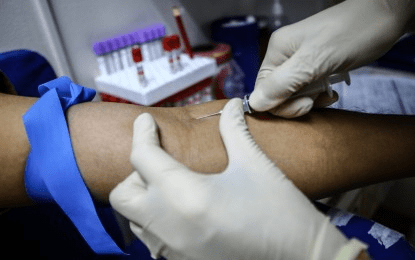
Free HIV testing and treatment services remain available in government health facilities nationwide, with authorities urging those at risk to undergo testing and seek early care.
Feliciano also highlighted the need for stronger education campaigns, particularly among the youth, noting that a significant share of new HIV cases involve individuals aged 15 to 25.
He called on the public to help eliminate stigma and instead extend support to PLHIV, stressing that awareness and understanding are key to addressing the spread of HIV. (PNA)