By Benjamin Pulta
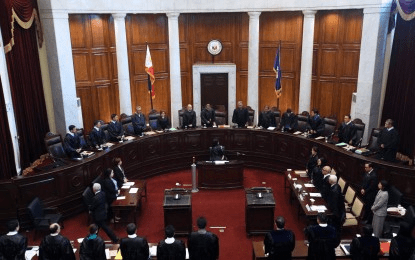
MANILA – The Supreme Court (SC) upheld the ruling of the Commission on Elections (Comelec) disqualifying a candidate in the 2023 Barangay and Sangguniang Kabataan Elections (BSKE) for violating provisions of the SK Reform Law’s “anti-dynasty” clause.
The SC en banc denied the petition filed by Merson Calubag, which challenged the poll body’s resolutions canceling his certificate of candidacy (COC) for SK chairperson of Barangay Magtangale, San Francisco, Surigao del Norte during the last BSKE, according to a statement issued by the SC Public Information Office on Friday.
The poll body said Calubag falsely stated a material fact in his COC when he declared that he was not related within the second civil degree of consanguinity or affinity to any incumbent Sangguniang Barangay (village council) member of Barangay Magtangale, despite his mother being a member.
Section 10, or the “anti-dynasty clause” of Republic Act (RA) 10742 (Sangguniang Kabataan Reform Act of 2015) requires that a candidate for the position in the SK must not be related within the second civil degree of consanguinity or affinity to any incumbent elected national office, or to any incumbent elected regional, provincial, city, municipal, or barangay official, in the locality where they seek to be elected.
The SC “recognized the legislative framework in RA 10742 for preventing the creation and expansion of political dynasties in the country as the Legislative’s answer to the constitutional call to define political dynasties, at least at the barangay and [Sangguniang Kabataan] levels.”
It held that such “breathes life to the constitutionally enshrined policy of the sovereign to prohibit political dynasties.” (PNA)