By Benjamin Pulta
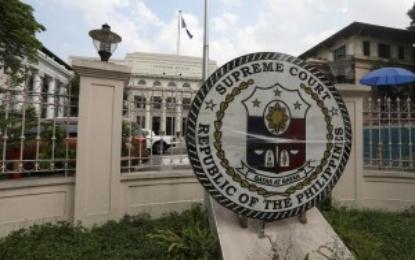
MANILA – The Supreme Court (SC) has acquitted a man in Muntinlupa City who was convicted eight years ago for carrying a knife during the Barangay and Sangguniang Kabataan Election (BSKE) period in 2018.
In a resolution written by Associate Justice Henri Jean Paul Inting and published online on Tuesday, the high court’s Third Division granted the motion for reconsideration of its earlier ruling and acquitted Philip Miranda.
The SC clarified that the prohibition on carrying weapons during elections applies to firearms, but not to bladed instruments like knives, “unless they are carried inside or near a voting precinct.”
Miranda was arrested during the BSKE period from April 24 to May 21, 2018, for possessing a 13-inch kitchen knife.
He was subsequently charged and convicted for violating Section 261(p) of Batas Pambansa 881, or the Omnibus Election Code (OEC), as amended by Section 32 of Republic Act (RA) 7166.
The SC held that while Miranda was found carrying a knife during the election period, there was no proof that he was in a voting precinct or within 100 meters of one during the days and hours prohibited under the OEC.
The high tribunal clarified the scope of the weapon ban during elections, citing Buella v. People, where it ruled that bladed instruments are not covered by Section 261(q) of the OEC and Section 32 of RA 7166, which prohibit the carrying of firearms outside one’s residence or place of business during the election period.
However, Section 261(p) covers a different offense—carrying deadly weapons, including knives, only in a voting precinct or near it, and during specific election-related activities.
Unlike firearms, which are banned everywhere in public during elections, knives are prohibited only in or near voting precincts under the law.
Applying this clarification, the SC revisited the elements of Section 261(p), which penalizes carrying deadly weapons only if done within or within 100 meters of a voting precinct and only during the specific days and hours set by law for election activities.
“In this case, while the prosecution established that the man was carrying a knife during the election period, it failed to prove that the act was committed in a voting precinct or within 100 meters of one, and that it occurred during the days and hours specifically covered by Section 261(p). In the absence of proof that he was in or near a voting precinct during the specified days under the law, the man’s guilt was not established,” the SC said. (PNA)